Hyphenate descriptive words

You need to hyphenate descriptive words. What does that mean? Let me explain:

I wish I had noise-canceling headphones to drown out all the sales guys at work.

A hyphen is used here (but is not absolutely necessary) because “noise” and “canceling” are acting as a compound modifier, modifying “headphones.” These examples are detailed fully on Grammar Girl.

Hyphens are a “look-it-up” punctuation mark. Though hyphens have several uses, we’re going to focus on how to use hyphens with compound adjectives. Compound adjectives are two or more words that together make an adjective. When they come directly before a noun, they’re known as compound modifiers and usually have a hyphen, like “noise-canceling headphones.” Here are a few more examples:

They had a long-term relationship.

The fire-proof vest proved to be a great life saver.

If the adjectives come after the noun, then they don’t need a hyphen. For example

Their relationship was long term.

Santa’s new vest is fire proof.

These terms need hyphenation in your brochures, web copy and emails because they are always used to describe something:

In-depth

Best-in-class

Buy-in

End-to-End supply chain

Up-to-date

On-site

Top-of-the-line

Hands-on

Step-by-step

Real-time

These terms are one word and not hyphenated:

Firsthand

Unpredictable

Beforehand

Unforeseen

Uninterrupted

Inconsistency

Derail

EXPERT INSIGHTS: MARKET RESEARCH FOR BRAND INNOVATION

How do you define brand?

“At its core, a brand is a promise to consumers. What will consumers get when they purchase a product or service under your brand umbrella? The brand promise incorporates more than just those tangible products and services. It also includes the feelings that consumers get when they use your products and services.” – Branding Strategy Insider

I asked four market research experts from MTV, J.P. Morgan, Meijer International and Union Bank to answer what that questions means to them.

This is what they said:

“In our world, it’s the brand of the company. As a retailer, this is tricky, because we sell products for many well-known brands. That said; we define brand as what our company Brad Hilemanstands for (services, products, etc.) and how we want customers to perceive us. We’re tasked with bringing the brand to life through content and creative, so it’s really about how we communicate through tone, visuals and story.”

– Brad Hileman, Director of Digital, Brand Development, Meijer Inc.

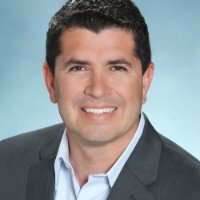
“The way a customer remembers you.”Xavier Corona

– Xavier Corona, Vice President, Sr. Marketing Manager-Multicultural and GCM
Corporate Marketing, Consumer Lending, Union Bank

Michael Rosenberg

“Brand is the public ‘image’ or ‘perception’ of a given company. Brand is more than just a logo or name, it’s the “embodiment of a company and its’ values to the public.”

– Michael Rosenberg, Managing Director, Corporate and Investment Bank Marketing,
J.P. Morgan

alison hillhouse“Any brand that is turning old models on their heads, for example, mattress companies Caspar and Tuft & Needle that are calling BS on the outdated and opaque mattress industry model. These new brands offer Millennials exactly what they want – perfect design in both product and communications, transparent product details, free trials with no commitment, convenience, affordability and promise of perfection. Industries that try to pull the wool over consumers’ heads like Sleepy’s are dead. Millennials won’t stand for them.”

– Alison Hillhouse, Vice President of Insights Innovation, MTV

Capitalization in Headlines & Subject Lines

Fix yo grammar.
Fix yo grammar.

Lately I’ve seen some inconsistencies between who is capitalizing what in certain subject lines and titles.

So, stop. It’s grammar time!

Opinions are divided across stylebooks on what words should be capitalized, but throughout my career I’ve been able to develop a universally-accepted, three-rule guideline:

  1. Always capitalize the first and last word of the subject line/title (you all are perfect with this rule.)
  2. Capitalize any and all words that are four or more letters in length
  3. Do NOT capitalize conjunctions (and, or, but, nor, yet, so, for), articles (a, an, the) and short prepositions (in, to, of, at, by, up, for, off, on).

Here’s a quiz I pulled off the World Wide Web to test you on these rules. Which words do you think should be capitalized in these titles/subject lines?

  • made to stick: why some ideas survive and others die
  • the story factor: inspiration, influence, and persuasion through the art of storytelling
  • fierce conversations: achieving success at work and in life, one conversation at a time
  • a funny thing happened on the way to the boardroom: using humor in business speaking

Think on it …

Still thinking ….

Do you know which words to uppercase yet?

Ok, let’s test those skills:

Made to Stick: Why Some Ideas Survive and Others Die (to is a short preposition; and is a conjunction)

  • The Story Factor: Inspiration, Influence, and Persuasion Through the Art of Storytelling (through is a preposition, but is capitalized because it is greater than four letters)
  • Fierce Conversations: Achieving Success at Work and in Life, One Conversation at a Time (one is capitalized because it is an adjective)
  • A Funny Thing Happened on the Way to the Boardroom: Using Humor in Business Speaking

The most common errors I see are with short words that are not conjunctions, articles, or prepositions. Words such as one, it, its, it’s, him, and own should all be capitalized no matter where they appear in a title.

I hope this helps! Next week a note on prepositions? Email me to let me know what you have questions about.

BONUS: Did you know there’s a name for the the “dot, dot, dot” … you see in emails and other correspondence? It’s called an ellipses (eee-lip-seas), and is used most frequently in writing when summarizing quotations.

How to Piss Off Every New Yorker in 36 Seconds by Hannah Hager

An apartment building on my street caught fire the day my roommate and I were illegally dipping out on our apartment. It was very inconvenient.

It was my third move in six months, but for a valid reason: Nicole and I had unknowingly moved in directly above a rowdy nightclub that made it impossible to sleep Thursday-Sunday between the hours of 10 p.m. and 4 a.m. After three months of this nonsense where I had multiple breakdowns and seriously considered retreating back to Virginia, I instead commissioned my lawyer uncle to serve my landlord a breach of lease contract. Then I cancelled my rent check and called “CJ the man with the Van.”

Of course that day would be when a rooftop greenhouse would blow up in flames on Avenue C. We were moving from 8th Street to 3rd Street – Five blocks on the same avenue that was now covered in fire trucks. Couldn’t they just rescue those people hanging from their fire escapes already? I was trying to make an actual escape from this shitty apartment in broad daylight. (Everyone survived the fire and damage was minimal.)

Ask Nathaniel

CJ, the Man with the Van, was so named in my friend Lauren’s iPhone who shared his contact information with me. He’s by no means an authorized mover as evidenced by his arrival in a conversion van that had the seats removed. His nephew and his friend were rolling around in the back.

CJ has a presence. He’s well over 6 feet tall and 200 lbs. He’s also enterprising. He has several businesses and the way he knows which one you’re calling about is which name you call him by. That day “CJ” was also “Nathaniel.” Nathaniel is a relationship expert who interviews women about their lives and loves.

CJ doesn’t actually do any moving. He is more of a supervisor, which lends him the time to be Nathaniel. I respect Nathaniel’s opinion, he offers such keen advice as “Nah, you and your boyfriend don’t fit. If he’s a Taurus he’s going to hold you back as a Gemini. He’s too stubborn.” (We’re no longer together.)

Which leads me to the video interview. Two years ago I had lived in New York only six months and CJ was explaining the reasons why New York women are so guarded. It’s because they had been through betrayals and disappointments. It didn’t resonate with me at the time, but after Nicole unearthed the videos of us from the bowels of YouTube I realized that I have changed.

I’ve been heartbroken now. I’ve been numbed. I still walk more slowly and talk more slowly than native New Yorkers, but my smiles now hide the same hurts and betrayals as my fellow Manhattanites. But I also realized that he captured me on the day I made the decision to not be a pushover anymore. I would stand up for myself and go after what I deserve.

(P.S. Hannah has two ‘N’s”)

Loudoun Valley is Where Jones Heart Is

If the home is where the heart is, then Loudoun Valley High School is home for Rodney Jones and its students and staff are his family.

A life in education felt like second nature to him because Jones, who is Social Science Department chair and presents lectures on both psychology and modern world history, comes from a long line of educators. His mother is a special education teacher and his father is an assistant principal in Stafford County.

Rodney Jones is Social Science Department chair and presents lectures on both psychology and modern world history at Loudoun Valley High School.

“I like helping,” he said. “I’m big on service. It felt natural to [teach].”

The foundation of teaching stands the test of time – you plan a lesson, teach the class and grade the papers. But, as a graduate student teacher at the University of Virginia where he received both his bachelor’s and masters in history and teaching respectively, Jones discovered that it takes much more than the basics to make a house a home.

“Rodney has steadily worked his way up in leadership roles in the school and isn’t shy about offering his insight and opinion but always in the most professional ways. He seems very knowledgeable about current educational trends and supports Loudoun County Public School’s mission and vision,” said Leanne Johnson, director of school counseling at Loudoun Valley High School.

A self-professed “history nerd forever” who “can tell you most all of the Senators in the U.S. Senate right now,” Jones’s passion for history and his desire to know why things happen as they do, is delivered with such exuberance you can almost imagine him telling stories of the separation of church and state and freedom rights in mid-20th Century – an idea foreign to some high schoolers – as if he were at the head of the dinner table instead of in front of a whiteboard.

The conversation isn’t one-sided. Most of his “awesome students” enjoy talking about themselves in psychology class where the discussions center around how they’re growing as individuals; physically, socially, cognitively and morally.

Perhaps walking students through the perils of adolescence is a difficult task, but it’s one in which Jones thrives. For the last five years, he has pitched in with the county’s CAMPUS program, which is a college prep course that serves historically underrepresented and first-generation college students. From this view, Jones has a front row seat to watch them grow in maturity, realize the value of hard work and understand the importance of college in being successful.

“I want to be a person to them, not just a teacher,” he said. “[Teachers need] to show that we care about them and their performance in school and outside of school and helping to build a whole and active community participant.”

One student Jones considers fondly was a first time athlete participating in track and field. Although it was his first sport and he wasn’t the fastest runner, the boy worked hard to slowly lose a couple of seconds off his time. Eventually, he reached a personal record, gained his confidence and started greeting Jones in the hallways.

“I saw his confidence build, which was great. For me, it made me know that it was all worth it,” he said.
He’s not the only one watching. Johnson describes “Rodney as a natural go-getter with never-ending enthusiasm, always putting students first. He will go to battle for anyone, including staff and students.” It should be noted that Johnson also pointed to Jones as “the best when it comes to emcees for pep rallies.”

After five years, he’s still settling into his adopted home at Valley, a school that has a long tradition within Purcellville where “everyone’s family out here in Western Loudoun.” He’s also still striving to be an excellent teacher. His hope is to one day be fortunate enough to have a student come up to him to say, ‘Mr. Jones was a great influence on my life.’

“I’ve been fortunate enough to have some kids already say that to me,” he said. “I’m really blessed about that.”

This article was first published in the Blue Ridge Leader in December 2014.

For the First Lesson, Listen to Your Inner Voice

The path to reach one’s calling in life doesn’t always build at a crescendo, but rather poco a poco – little by little – as we learn to embrace our inherent talent.

Jessica Morgan is the director of choral activities and advanced orchestra at Woodgrove High School in Purcellville.

Such was the path taken by Jessica Morgan, the director of choral activities and advanced orchestra at Woodgrove High School. Maybe it should have seemed obvious for Morgan to one day become a professional music director; she was a singer at four years-old and a violinist at five.

But, to whom much is given, much is expected and it was perhaps those expectations that initially drove Morgan away from sharing her talents with others. A Winchester native, she started out at James Madison University as a Biology major. However, a little birdy wouldn’t stop singing the song of music in her ear. She tried out for JMU’s School of Music and it’s of little surprise she was accepted. Any initial resistance melted into acceptance and today she realized that her role as teacher also poised her to be a lifelong student of music herself.

“If you’re a truly great educator then you’re a lifelong learner. You must be willing to change because there are always new methods and new techniques,” she said.

Perhaps there is no greater success than witnessing the growth and development of a student. One of Morgan’s pupils, Scott, appeared one day to audition for the Jazz choir. He had never before so much as carried a tune, was unable to sight read music and had never taken a private voice or piano lesson. But, he possessed an intrinsic motivation and passion. Throughout his years at Woodgrove he’s become a natural leader and is now a member of one of the top choirs in the state.

“It’s amazing to see that much of a transformation from someone who has never sang a note in their life and here they are one of the best singers in the state three years later,” Morgan said.

The same transformation could be said of Morgan herself. Woodgrove’s chorus program has grown tremendously under her leadership, most notably by the selection of five seniors for the All-State Choir and the 49 students were chosen for All-District selections this year. “She is such an outstanding, positive and influential teacher,” said Woodgrove Principal William Shipp. “I believe she is able to make this happen because she has very high expectations for them and for the program – and she creates wonderful and meaningful relationships with her students.”

Morgan requires a high level of work, discipline and skill of her naturally very talented students. Their sight reading skills are constantly being tested with new sheet music and she builds on the foundations and the technique of singing, the vocal pedagogy, the way the voice works and the way they should breathe and produce a tone.

She has high expectations of her choir who she describes as “boisterous, loud and outgoing” and her orchestra students, who are “a bit more disciplined and very, very sweet.” While she expresses her own joy for music upon them, she also ensures that they are music literate, that they are able to site read and have a choice in performance selection. Most notably, she works from a base of mutual respect.

“The students have tremendous respect for her and work hard to improve their skills and the level of their performances. I believe the students do this not only for their own self-improvement, but also for her because they know they have a teacher who believes in them and wants them to be successful,” Shipp said.

For Morgan, teaching high school chorus has been a warming up exercise. Each year, the more she does it, the more she falls in love with it.

“I really love the students. I really love making music every day,” Morgan said. “You should form relationships with your students and motivate them to go above and beyond.”

This article was originally published in the Blue Ridge Leader in December 2014.

Ancestors: Not Always People of the Past

A verbatim email I received, which shows the virality of the Internet at its best.

Dear Hannah,

Yesterday, I was searching for Kidwell (Zedekiah 1806-1880) descendants and found your nice Mar 2013 article of your grandmother Geraldine Potts.

Grandma and I laughing at the dinner table the year before she died.

Then I find her Feb 2014 obituary.  I believe Zedekiah Kidwell was a son of Thomas Kidwell and had a sibling of Frances Kidwell Waters (1817-1864).   

Thomas Kidwell married Feb 18 1801 in Loudoun Co VA to Elizabeth Freast. In the 1940s, two relatives who were researching first generation Johannes Furst/Fierce determined that Elizabeth was a granddaughter of Johannes Furst and daughter Christian Fierce.  At that time in late 1700s and early 1800s, there were various spellings of the last name. 

Christian’s children left Loudoun and moved westward and the male children took the spelling of Fierce.  The research in 1940 identified other children of Christian, one of which was my ancestor Conrad Fierce (abt 1777-1840).

I think Thomas died before 1820 and I have found his wife Elizabeth moved west with her daughter Frances Kidwell Waters. (Zedekiah was a witness to the 1839 marriage of Frances to Elmore Waters.  Also, when Zedekiah married again in 1878, a Loudoun County researcher shows his parents as Thomas and Elizabeth)

Your ancestors from Zedekiah to you are as follows:

Zedekiah Kidwell and Mary Ropp

  Samuel Kidwell and Henrietta Shaffer

     Linda Kidwell and Walter Potts

        Geraldine Potts and Robert James

           Linda James and Marty Hager

I have never been in contact with anyone living In Loudoun County about ancestry.   I didn’t notice until yesterday about who wrote the article.  Since 2000, I have added about 20,000 names to a first generation Johannes Furst/Fierce family tree maintained by another descendant who had about 1,000 names.  Of that number, about 1,000 names are from Frances Kidwell and Elmore Waters. 

I link articles of living or recently living Fierce descendants to other Fierce descendants.  I will be linking your interesting article in emails to others.

Since you have a gmail address at the end of the article, then I wanted to give you a heads up in case a Fierce descendant contacted you.  Also, I found your 2011 interview online (youtube) with Harmon Killebrew.  This past year, I have now seen baseball at all of the 30 Major League Cities.

Video: A Look Back on Call Center Week 2015

I’m trying new things, y’all.

In June this year I attended the 15th Annual Call Center Week in Las Vegas. (It also happened to be where I celebrated my 29th birthday.)

CCW first image

Watch Now: A Look Back on Call Center Week

As Content Director, I was tasked with collecting photos, interviews and articles that accurately and educationally showcased the event.

Click on the link to see the final cut!

Hacking Critical Infrastructure Explained: Common Attacks and Good Defense

Cyber security attacks on industrial control systems have increased in number and complexity in the last few years. Attacks like Stuxnet and Night Dragon have proven that cyber attacks can have significant negative business impacts and potentially even loss of life.

shipp1At the upcoming Cyber Security for Oil & Gas Canada event, Chris Shipp, the Chief Security Information Officer for Fluor Federal Petroleum Operation, will provide an overview of current successfully cyber attacks and threats, followed by a live hacking demonstration of a control system and conclude with a case study demonstrating important security components in control systems. This interview provides a sneak peek of what’s to come at the event …

* The thoughts expressed here are solely the opinions of Chris Shipp and not necessarily that of the Strategic Petroleum Reserve.

HH: Walk us through the journey that led to you being known as the utmost “hacking” expert in the industry.

CS: As Chief Security Information Officer for Fluor Federal Petroleum Operation, I function as the chief cyber security representative at the U.S. Department of Energy’s Strategic Petroleum Reserve for about 14 years.

When I started in October 2000, I was the only person allocated to cyber security. I first got into cyber security via a rather circuitous route because there wasn’t a direct route to become proficient in cyber security. As part of my earlier job history, I worked at a professional services company where we provided maintenance and professionals services related to IT systems, implementation of networks and applications and so on for various commercial and federal customers. I have also taught some at Tulane University and during those years, one of the things that I noticed with respect to teaching the curriculum I was looking at and with the systems I was implementing, was that there wasn’t a lot of information directly about cyber security. It began to concern me. I had a few customers who were very forward thinking who asked about security and how their data was protected and so I began to do a lot of my own research and in that research I became something of a cyber security expert. I’m not really comfortable with that term because I’m still learning and it’s an ever-evolving process, but I became very proficient in cyber security, which is something not a lot of other people at that time were able to achieve simply because they weren’t a lot of avenues or requests for it.

I began to incorporate more security information into the curriculum I was teaching at the local university as well as talking more with my customers about things that we could do to secure their data. Through these conversations, I was put into contact with the Department of Energy because they were looking for a Chief Cyber Security guy. I’ve had the wonderful opportunity to work through a cybersecurity program that really was in its infancy, its adolescence, as most programs were back then, since there weren’t as many federal regulations or they were just starting to be implemented. We were able to build that program all the way through and build a risk management program for both classified and unclassified systems; systems that have to do with standard business operations and control systems.

Although you don’t like to call yourself an expert and instead refer to yourself as a student of your industry, I am very appreciative that you have knowledge of both sides of the coin since you have knowledge of both government and industry cyber security practices. Would you provide a brief overview of the cybersecurity discrepancies between government and business in terms of how they are able to prevent, protect and manage security threats? What can government agencies learn from industry and vice versa?

First let me say that I would divide industry into two separate camps. One would be commercial entities that don’t have a lot of federal or local regulatory requirements specifically related to cyber security yet. And then the other camp would be those that do like NERC CIP, which is energy regulation with respect to cyber security, HIPAA has some cyber security elements related to health information or the Gramm-Leach Bliley Act, which applies to financial entities. So, those entities have some very strict regulatory environments that correspond pretty well to typical federal government agency requirements.

I would put other commercial entities that don’t necessarily have that regulatory requirement yet in their own separate camp. With respect to the commercial entities that do have regulatory requirements and typical federal government entities I would group them into one group.

There are two common issues that they have. The first and foremost would be that cyber security personnel typically do not have a strong business background and so they do not have the capability or the proper business knowledge to present cyber security proposals in a way business decision makers understand and approve of. For example, if I were to tell a decision maker, someone who holds control of a particular budget, “Hey I need a new intrusion detection system because it does a better job of detecting and stopping the bad guys, what does that really mean from a business perspective? I haven’t expressed that in terms where a person who is business minded would understand.

Conversely, I would be more successful if I had said, “Look, we have this very important system, and well all agree it is important, but we have seen within the last three months increasingly complex attacks against that system that are coming closer and closer to being successful and based on that we predict with pretty reasonable probability that that system will be successfully hacked within the next 90-120 days if we don’t introduce this particular intrusion detection system will cost you $100,000, if that system were hacked and down for a day, it would cost $1.2 million.”

That is something a business decision maker could understand and what I find when I talk to many different people in the cyber security realm, often you will find somebody who was initially very technically astute, brilliant people and they end up running a cyber security program. They’re very good at what they do, but they don’t necessarily have the business acumen to express the need in that way.

That’s a good point, and let’s jump in to the hiring process of these operators. As the saying goes, a business is only as good as its workers, especially for oil and gas companies. What best practices could you provide for the hiring and maintenance of cyber security staff so that they are fully prepared to prevent and address threats?

That’s a great question, in fact, of the two main issues that I find in organizations with cyber security is that they simply don’t have people with technical know-how at the technical level to properly implement and maintain cyber security. It’s a difficult problem to solve because cyber security is a relatively new discipline; it’s not as mature, so therefore there are not as many people who have the necessary skill set.

Cyber security is a skill set that would be akin to a specialty in the medical field. For example, you would never try to train somebody to be a cardiologist before they became a MD. First, you learn how to become a good doctor and then you use that as a baseline if you go to finishing school to learn how to be a good cardiologist. The same thing is true with cybersecurity. You can’t learn cybersecurity in a vacuum. A good cybersecurity technical person, for instance, has to build their security knowledge on some other discipline that they have strong knowledge in. For example, they may be a person who’s worked with network infrastructure switches and so they have a very good working knowledge of those systems and can take that knowledge and build upon it to make good systems for cybersecurity in those environments. Perhaps they are an application developer. They can use that knowledge to build upon and become very good at application security. So, one difficulty is that it’s not a discipline where you can take the smartest person from scratch and teach them fairly easily.

The other difficulty is many colleges do not provide good cybersecurity programs. Often colleges are teaching somewhat antiquated computer science. Not always, but that’s often the case because computer science changes frequently unlike some other disciplines. The good news is that the National Security Agency (NSA) has established something called the National Centers on Academic Excellence. Colleges can apply for this program, which incorporates cyber security elements into their curriculum, as defined by the NSA. If a student goes through the program and learns those elements then they have a good working knowledge of cyber security in which to build. Personally, I’ve been able to leverage that avenue to hire several top notch cyber security people that didn’t require a tremendous amount of education and training to bring them up to speed.

Will you share with us the risk management strategy for the cyber security program at the Department of Energy Strategic Petroleum Reserve? How has vulnerability management, continuous monitoring and incident response evolved during your tenure and where do you see areas for growth?

I want to make sure I don’t share information that is sensitive, so I will talk about the program that is provided by NIST, which we make heavy use of with respect o risk management.

NIST 800-37 is a wonderful document, and let me point out, too, that NIST standards are paid for and developed by the government and available freely to anyone. There’s a six-step process involved in what the NIST calls their risk management framework. It starts with a business process, which is categorizing information systems. For example, in the oil and gas industry you may be talking about a business system or a control system. What does that control system really do for you and how important is it to your mission? That is a business determination not an IT or cybersecurity determination, so business decision makers must be involved in that process. Based on the determination, you follow a process where you select the appropriate security controls to apply to that system. You implement those controls and then once they’re set up you continually assess their value and monitor them. It’s a circular process.

Sometimes there’s the misperception by those outside the IT industry that once you develop a system and put it into place it’s fairly static. Nothing could be further from the truth. Even if you have no new projects and just say, ‘we’re running as is,’ you have many, many software and application updates that will change as the risks and updates come out. It’s a continual process to determine how important this system is to our business and therefore we determine how much time, money and effort we’re going to spend to protect it. That informs the selection of the appropriate security controls, how they’re implemented in the environment and how well they continually operate. That’s the process of boots-on-the-ground implementation and the procedural and technical goals we use for cyber security.

The next question would be how to maintain the system from the perspective of the business. It’s done by storytelling. When I tell people this, they laugh at me because they think it means I’m telling something that’s an untruth, but what I mean is when you hire someone who has a strong background and understanding of cybersecurity and they also have some business acumen then they need to tell a true and accurate story to business decision makers: “This is the risk to the system, this is how we’re mitigating that risk and this is the residual risk.”

I know I’ve emphasized this before, but I see the redundancy again and again. Business decision makers are in business to make money or in the case of a federal government entity, they have a tight budget, so you have to explain to them the benefit of that spend. You have to tell a story in business terms that helps them understand why they should spend the additional dollars, why they should hire the additional personnel or allocate the additional resources to do the additional tasks you’re defining.

Effective Email Marketing for Niche Markets

This is a rough recreation of a niche marketing email I wrote for the Military Radar community. A few notes about why it works:

  • It has a catch subject line
  • It opens with a quote from an industry expert
  • It presents the event’s Five W’s upfront
  • It has four calls-to-action to download the content piece
  • It establishes industry knowledge

Let’s get to the email. The subject line was:

From the Desk of Dr. Guerci: Next Gen Antennas

8th Annual Military Radar Summit
February 23-25, 2015
Washington, D.C.

www.MilitaryRadarSummit.com

The Military Radar Summit is a truly unique venueIt addresses the entire radar enterprise: emerging customer needs and markets, the latest technology developments and unparalleled networking opportunities with those ready to do business…

Dr. Joe Guerci, Fellow and Warren D. White Award Recipient, IEEE

Dr. Guerci, the foremost radar authority, has been the Military Radar Summit’s chairman many times over and has provided us with an exclusive article on the Next Generation of Affordable Smart Antennas. Read the full article here.

Dr. Guerci's content piece, which is promoted in this content marketing email.
Dr. Guerci’s content piece, which is promoted in this content marketing email.

Next Generation Affordable Smart Antennas

A confluence of advances in low cost digitally controllable RF metamaterial-based apertures and real-time embedded cognitive signal processing has afforded a new opportunity to realize a distinctly new and affordable low SWAP smart antenna capability for a multitude of demanding applications from communications to radar. This article, which is co-authored by Dr. Joe Guerci in the Microwave Journal, provides an overview of these enabling advances, their synergistic combination and the new markets that are emerging as a result.

Download the ArticleEmail Me the Article

For more information on the event, including the draft agenda, additional content and speaker and session information, visit www.MilitaryRadarSummit.com.

I look forward to seeing you this February 23-25 in Washington, D.C.

Kind regards,

Headshot-1

Hannah Hager
Online Content Director
IDGA

P.S. Take a peek at this summary of our past attendees for an idea of who you can expect to meet and network with at the event.

Here’s the full thumbnail of the email:

Guerci Thumbnail