Does anyone even know the definition of an infinitive? It’s one of the most basic forms of a verb “to be, to have, to hold” are some examples. When a verb is accompanied by the “to” they are always supposed to be written together. Oftentimes, we separate the “to” from its verb friend “have” in a way that is incorrect. But, as the degradation of the English continues, this probably won’t be an issue in the future.
Examples:
I have to gently hold the baby. (the infinitive is being split by “gently” and is not correct)
I have to hold the baby gently. (this is correct)
Side note: This isn’t an issue in many foreign languages, such as French, Spanish, etc., because they use one word to express the infinitive.
French: Aller (to go)
Spanish: Hablar (to speak)
Here are two more common errors:
Woulda, coulda, shoulda
Most people incorrectly pronounce these as “would of, could of, should of.” Blame Southerners.
Correct: Could have, should have, would have
If I could have seen my mom last night, I would have requested her famous pasta dish for dinner. I should have created a shopping list for her.
Who vs. That
This is simple, but is often written and spoken incorrectly. A way of remembering when to use “who” vs. “that” is to associate who with people and that with nonliving things
Our speakers, who are experts in the industry, will join us at the Summit.
The brochure details the sessions that you can attend at the event.
Jeremy Booth feels like a broken record. He’s said time and again that the future success of call centers hinges on taking proactive performance measurements. Call centers need to stop looking at historical data that only depicts what’s already happened and instead they should focus on what is going to happen.
I sit down with Jeremy Booth, Associate Vice President of Cambridge Investments.
He is Associate Vice President of Cambridge Investment Research, which is an independent broker-dealer with 2,600 advisors around the country who are his clients. His call center has 40 agents, who field about 150,000 calls per year and they’re tracking to make $600 million in revenue this year. In this interview, he explains why call centers need to stop looking over their shoulders and start looking ahead.
Jeremy believes call centers keep looking over their shoulders. Traditionally, they focus on lagging measures – agent availability, average speed to answer, call length – and other metrics that track service when considering agent and call center performance.
While historical measures are great because trending analysis can be gleaned from them, it’s time now to focus on predictable, influence-able outcomes. The time is now to look into the top most important performance metrics looking forward to 2015.
The easiest and most impactful way to do this is by ensuring training is effective, hiring practices are in line with business need and other indicators that will have a direct impact on those lagging measures, Jeremy says.
“We’re of the mindset that if you focus on and are proactive on your upfront service — whether it’s operations or the service that’s built out (for example) … and don’t give our advisors a reason to call us for anything that’s not informational – if we cut out the issues, that our satisfaction scores will follow right along with that,” Jeremy says.
The future of call center performance, therefore, depends on the strength of its proactive measures. Centers need to be able to focus on predictable, influenceable outcomes. He likes to use the example of weight loss since it is a simple concept most people can relate to.
“If I stand on the scale every day, am I going to lose weight? No. It’s going to tell me I’m either going to go up, or I’m going to go down, or I’m going to stay the same. I’m still looking at it every day. It’s something that’s already happened. But if I know that my caloric intake and what I burn in calories are directly related, and those are influence-able things that I have going on in my life. If I can burn more calories that I can take in, I don’t have to check the scale every day. I can do it once a week or once every two weeks, and I will see progress if I stick with the plan,” he says.
Therefore, instead of focusing more on the numbers and the metrics, call centers should take a holistic view and then ask themselves, “Is this strategy aligned with the end business goal seeing?”
I know what you’re thinking: There’s nothing Hannah’s not good at.
But, that’s not true – I ended the previous sentence with a preposition, which is a big no-no. Let me tell you a few other grammar mistakes I’m prone to. << also a preposition
I always misspell “sentance.”
I don’t know when to use effect versus affect
I used the wrong word/spelling last night (I’m in blue)
Now that it’s clear I’m not perfect, let’s dive into prepositions. I could have a series on this, but if you remember one thing, please remember to never end a sentence with a preposition:
Prepositions of Time: at, on, and in
We use at to designate specific times.
The report is due at noon.
We use on to designate days and dates.
My sister is arriving on Monday.
She’s having a party on the Thanksgiving Day.
We use in for nonspecific times during a day, a month, a season, or a year.
She likes to drink black tea in the morning.
It’s too cold in autumnto bike on the path outside.
Prepositions of Place: at, on, and in
We use at for specific addresses.
John Smith lives at 55 Boretz Road in Durham.
We use on to designate names of streets, avenues, etc.
Her farm is on Allder School Road.
And we use in for the names of towns, counties, states, countries and continents.
She lives in Sanford, North Carolina.
Save money. Save time. These are the main benefits to implementing a truly streamlined technology suite. Call centers all have the same end goal, but has anyone truly created the formula to successfully align technology with business strategy? What are the ways in which call centers or customer care centers can achieve that balance?
Liz Osborn, Vice President of Product and Solution Marketing at Five9, answers all these questions and more.
I interview Liz Osborn, Vice President of Product and Solution Marketing at Five9, about the new face of multichannel interactions.
Your technology should help you achieve three things: Create a better customer experience, increase revenue and improve cross-sell and upsell capabilities, says Liz Osborn, Vice President of Product and Solution Marketing at Five9, which is one of the leading providers in the cloud contact center space and offers inbound, outbound, blended voice services, contact center infrastructure and multichannel.
The modern customer is self-sufficient and prefers self-help customer care models. It’s ever more important, therefore, that your company’s technology works across all channels to not only aid your customers, but more efficiently support all roles in the contact center. Agents, administrators and management all benefit from the universal view achieved with a unified platform and interface.
Complexity is the enemy when it comes to customer service. Call center agents and management need to think about service from the customer’s point of view. The way to do that is by using a unified interface that maintains simplicity for both the agent and the customer. This leads to the question of what next generation multichannel interactions will look like.
The first thing call centers need to recognize is that customers don’t think about the channels they’re using to interact with your company. They don’t understand that – and are unforgiving if – information about them is lost between their interactions with you. Whether they contact you via social media, by picking up the phone, by using live chat, or by physically going to the store, customers expect the company’s technology to follow their touch points and journey.
Context – the ability to seamlessly move from one channel to another and still have memory of previous interactions – should be the main technology piece call centers should look for in the future.
Further, call centers need to utilize technology to analyze predictive behavior based on buying patterns, Liz says. We need to “be able to take that context and add a number of other external triggers of customer history, skills, a number of other SLAs, and make real-time decisions about how to treat that customer and send them to the best resource available,” she says.
But there are three main inhibitors to maximizing agent productivity; the first is in regards to the customer, the second is in regard to the agents,and the third is the operations around the contact center.
1. With the customer the challenge is servicing them in the channel that they really desire. Five9 conducted a survey of customers,
consumers and contact centers. Customers said over 50% of them would move to a competitor if the competitor offered a channel that the current company didn’t.
More and more people want to be served on social. Customers are asking to be served on social, and yet 60 percent of contact centers surveyed aren’t servicing in social.
2. When it comes to the agents, there are a number of challenges involving the rolling complexity of the different channels. Most
contact centers are still in silos, so they have different applications for chat. If they do operate on social channels, they use a different application for it than for other channels such as voice. Five9’s survey found that around 50 percent of agents use more than four applications to service a customers – and many use up to fifteen. These multiple applications are non-productive for an agent and frustrating for a customer.
3. Operationally, call centers need to take a step back and take a holistic look across channels. This can be very challenging, since
most centers have silo channels and struggle to figure out what the customer journey is and what their best SLAs are across channels.
This is further complicated by the dependence on four or five different applications.
To remedy this issue, Liz and her team developed Five9 Connect, which combines email, chat, social, visual IVR and mobile, which she says is “a secret weapon to allow contact centers to really focus their resources on the highest priority interactions. It includes natural language processing that helps contact centers understand what’s important, relevant and trending in all of the text channels, social, email, chat. It includes business roles to apply your policies, and be able to decide where that interaction should go and what priority it should take. And then finally it includes a number of agent assistant tools to allow the agent to quickly resolve what the issue is, whether it’s a customer service or a sales issue.”
The future of call centers is bright. “I love the words of Peter Drucker. He says that, ‘The whole goal of business is to create and keep customers.’ And I think in the future, as time goes on and companies are understanding that the customer and customer service is a competitive differentiator, that contact
centers have more and more of a strategic role to play … creating and keeping customer service and becoming a profit center and more strategic to the business. So I think it’s exciting times ahead.”
The first step to managing employee expectations, goals and demands
is to understand what those demands are. The only way to do so is to
ask them. Transamerica, a financial services institution, conducts annual
employee satisfaction surveys, but they don’t just complete the survey
and then put it in a box and file it away. They look at them, evaluate
them and then slice and dice them to identify the top three areas of
opportunity. Action plans are then put into place; the results of which
are later communicated to staff.
Crystal Wyland is the Vice President of Customer Experience at Transamerica.
In this interview, Crystal Wyland, Vice President of Customer Experience, explains why Transamerica doesn’t just ask for employee’s opinions. They act upon them.
Listening. It’s all about listening. You should listen to your customers; but you should also listen to your employees. Listening is the key interlocking piece that can help you satisfy business demands while also meeting and exceeding employee goals.
Crystal Wyland is the Vice President of Customer Experience at Transamerica, a financial services organization with more than 10,000 employees across the U.S. The firm evaluates employees annually, but they also make a point to conduct a mid-year evaluation for career pathing reasons. Crystal says the regular evaluation of employee performance helps the firm better understand what they’re looking for and perhaps determine other areas of interest within the organization.
Crystal spoke on “Updating Your Recruiting, Training & Developing Practices to Keep Up with Employee and Business Demands” Crystal Wyland, Vice President of Customer Experience, Transamerica When an employee first enters a large organization such as Transamerica, they’re only really aware of the job they’re entering into. So, they created what they called foundations training, which was an idea that was born out of employee satisfaction survey feedback. Now every new employee goes through foundations training to learn the history of the company, the leadership, and the various locations, products and offerings they provide so that an employee is more enabled to see and develop a career path and understand what’s available to them within the organization.
Another example of how evaluations enabled empowerment was with time off.
With contact centers, it’s always difficult to balance how much time to allow off or how many people to allow off in order to still meet service or contractual obligations. There was a period of time where they weren’t balancing it appropriately in the staff’s view, which was hurting morale.
“We didn’t want that, so instead of operning it up on a quarterly basis, we opened [the leave schedule] up for the full year and allowed them to schedule their time throughout the entire year,” Crystal says. “It really did a lot for improving the employees’ morale and meeting their expectations.”
Some Washington Dulles passengers took preventative measures into their own hands.
One Washington Dulles Airport traveler had a very bad day Oct. 13. The middle-aged woman who had just returned from a West African country was immediately served with an outstanding arrest warrant from Maryland. But, her troubles didn’t end there – she caught a slight fever while awaiting extradition at the Loudoun Adult Detention Center. Measures of great precaution ensued.
Luckily, INOVA Loudoun Hospital physicians cleared her of posing any risk to others and she was able to leave Lansdowne hospital on Oct. 17. Nevertheless, her bad day could have wreaked havoc on the thousands of Loudoun residents and airport travelers left in her wake.
As a gateway to the U.S., and the world, Washington Dulles Airport has been under mounting pressure to set a safety precedent. The airport this week launched a new layer of entry screening for all travelers from the Ebola-affected nations of West Africa as fears of the deadly Ebola virus continue to spread.
Washington Dulles International Airport is one of five international airports to receive passengers from Ebola-infected West African nations.
On Oct. 9, the U.S. Center for Disease Control and Prevention together with the Department of Homeland Security’s Customs & Border Protection announced it would beef up security at Dulles, New York’s John F. Kennedy and Newark International airports, Chicago-O’Hare and Atlanta. The five airports welcome nearly 95 percent of all travelers from Ebola-effected areas.
“We work to continuously increase the safety of Americans,” said CDC Director Tom Frieden. “We believe these new measures will further protect the health of Americans.”
Only 150 people from West Africa travel to the U.S. daily, according to customs officials.
Still, that won’t stop trained staff from looking out for incoming West African passengers who may show signs of the illness. Travelers will have their temperatures taken with a no-touch, infrared thermometer at a pre-determined screening site. If a fever is evident – one of the first signs of the deadly virus – they will be taken to a CDC quarantine station for further review. If not, they are free to go, but will be encouraged to self-monitor for symptoms.
The extra measures should come as welcome relief to Loudoun residents who have already had their fair share of Ebola scares. In addition to the middle-aged inmate, United Airlines confirmed earlier this month that Thomas Eric Duncan had made a layover stop at Dulles before heading to Dallas/Fort Worth International Airport. Less than one week later, Duncan became the first Ebola victim to die on U.S. soil.
Loudoun officials are taking the threat seriously.
“As the home of Dulles Airport, it is critical that we are prepared for any eventuality,” said Loudoun Board of Supervisors Chairman Scott York. “We take our mission to protect the health, safety and welfare of the people of Loudoun very seriously.”
Ebola is not an airborne illness, but is transmitted through human-to-human interactions. It has an incubation period of two to 21 days and therefore humans are not infectious until they develop symptoms, according to the World Health Organization. Symptoms have a sudden onset and include fever fatigue, muscle pain, headache and sore throat followed by vomiting, diarrhea, rash, impaired liver and kidney function and sometimes internal or external bleeding. Nearly 4,000 people have been killed by the virus in West Africa, but Duncan is the only person who has so far been diagnosed and died of the virus in the U.S. Shortly thereafter, a Dallas area nurse was positively diagnosed with Ebola, but she is expected to make a full recovery.
Despite the extra layer of security, some passengers are taking prevention matters into their own hands. A viral image circulating various social media shows a Dulles passenger donning a homemade plastic hazmat suit and face mask – an image you would expect to see in an episode of Breaking Bad, not in one of the nation’s top airports.
Fear has prompted the top Loudoun health official to make assurances that the risk of Ebola spreading widely here is low.
“It’s important to remember that people with Ebola cannot spread germs until they have symptoms, and that the disease is spread through direct contact with the bodily fluids of a person who has Ebola,” said Dr. David Goodfriend, the Loudoun County Health Department director. Duncan did not show symptoms when he traveled through Dulles.
The Loudoun Health Department is part of a network of health agencies that routinely share information on disease management and control. Still, citizens can take precautions to fight any deadly illness; Regularly wash your hands, cover coughs and sneezes with your elbow, get routine flu shots and avoid anyone who is sick.
An ampersand is the informal symbol for “and.”It’s called an ampersand and it’s grossly over-used in business writing. Ampersands are pronounced as written: am-per-sand.
The ampersand is an over-used abbreviation for the word “and” – it really should be limited to a few situations in formal, business writing:
1.) In company names where it’s warranted (Smith & Jones Law Firm)
2.) When artistic considerations dictate; e.g., a logo
3.) In specific academic references (Grant & Smith Publishing,2001)
4.) Addressing a couple on an invitation or envelope (Mr. & Mrs. Smith)
5.) When items in a series are related, but this is bridging on unacceptable (John has experience in Marketing, Research & Design and Business Management)
In general, it is not proper grammar to simply abbreviate the word and replace it with an ampersand. Why? Because the ampersand symbol is considered more casual. If you’re working for a business-to-business or business-to-consumer company, you should not be using it. If you want to send it in a text message to your bae, however, that’s fine by me.
In conclusion, it’s not that I hate the ampersand, it’s just not correct in formal, business writing.
Expedia moves millions of people around the world. It supports a multitude of languages, geographies and brands in more than 20 countries. And yet despite its scale, the company excels at making its customers feel like they know them personally. How do they do it? With their technology.
Mikko Ollila is Senior Project Manager at Expedia.In this interview, Mikko Ollila, Senior Project Manager at Expedia, explains how they empower agents to meaningfully relate to customers.
________________________________________
By Hannah Hager
In an organization that handles millions of calls annually, the task of ensuring agents are effective, efficient and operating in a meaningful way can feel cumbersome. Agents need to be empowered to relate to customers. The key challenge is to have a scaled operation that can quickly ramp up or down agents based on their peak seasons. To address this issue, Expedia relies on its technology suite.
Mikko Ollila is the Senior Project Manager at Expedia. He manages more than 30 call centers supporting 9,000 agents that field customer service and sales calls who handle roughly up to five million calls per month. Not only do his agents take a lot of calls, but they may struggle with relating to what the caller is experiencing.
Travel is highly stressful. The stakes are really high — Expedia’s customers are often celebrating important life events such as honeymoons, anniversaries, reunions or visiting dear friends. If the company drops the ball, it leaves a negative imprint on the customer that is going to stick around, Mikko says.
Reliance on the correct technology is paramount. It allows agents to see a full picture of what happened and take that context to have an idea of what a customer may be calling about. In essence, it enables them to get to the heart of the matter at a faster rate.
“We have a lot of context about you. We know your itinerary; we know what’s happening to your flight or your hotel reservations. You might be flying into some weather and you don’t yet know it yet, but we do,” he says.
In the future, conversations will continue to swirl around multichannel, Mikkos says. Expedia currently has the ability to see what the customer did on their website, on their mobile and what happened if they called or used the IBR. “That tells a complete, almost like a movie, sort of frame by frame of why you are now on the phone with us and how we can best help you,” he says.
An effective technology suite translates to a competitive advantage, Mikko says. Expedia utilizes a broad stack of technologies to store and understand data from various sources. Expedia is building things on Hadoop, which is the open source data source system, and they’re also using external third-party packages, such as Pegasystems for case management. It also does a lot of its own Java-based development.
But, not all call centers have these luxuries. They may lack time, budget, the back-end ability or support from their executive suite.
“The advice from our experience is; ‘Be nimble, be opportunistic, because you have to be, but also keep it in the back of your mind that there will be a day when you might have to pay a price for if you don’t keep yourself in check, and allow your tools to proliferate in an uncontrolled fashion,” he says.
In the future, technology should continue to allow for better one-on-one communication with the customer. Times have changed. Today’s customer expects their brands to know them from all of the different ways they’ve conversed with the company. Every customer wants to feel special and none want to be treated like the next person.
“That change in customer mindset over the past couple years and going into the future has a huge impact on how we’re allowing ourselves to interact with the customers and make those interactions truly more specialized and tailored,” even while they’re dealing with millions and millions of customers, Mikko says. “All this technology that we’ve been talking about really gives us the capability to do [that].”
The theory behind excellent Customer Service isn’t complex: Do everything in your power to assist caller inquiries in a timely manner and do so with a smile. Simple, right? Not so fast. Support environments are complicated and mired with numerous hiccups.
Amy Latzer and her team at LA County’s 211 offer “Real Help” to their in-need callers.Amy Latzer, Chief Operating Officer at 211 LA County, says providing excellent Customer Experience starts with proper training. In this interview, she answers the question, “How do you train and develop a staff that is able to possess a skillset that goes above and beyond the caller’s expectations?”
________________________________________
By Hannah Hager
What is it that your customer wants? This seems to be a simple question, yet the end goal of customer happiness often gets lost in support environments that are mired by multiple transfers, dead-end calls, impersonal agent interactions and disjointed communication across channels. These poor practices damage customer loyalty and, in turn, deliver your clients straight into the hands of your competitors. So how do you temper the issue of when a call center unintentionally loses sight of the end goal: a successful interaction — from the customer’s viewpoint?
An excellent customer experience is always front of mind for Amy Latzer, Chief Operating Officer at 211 LA County. 211 LA County is a private, nonprofit organization based in San Gabriel, CA. Its 60 agents serve all 10 million residents of Los Angeles County, fielding nearly half a million calls per year. The center, which has been in business for around 35 years, will soon celebrate its 10 year anniversary of receiving the 211 designation.
She and her team are in a unique position when it comes to implementing an effective Customer Experience strategy – 211 callers are most often in a state of mental or physical distress. Therefore, her team must respond in an especially caring and compassionate way from the get-go.
How do you train and develop a staff that is able to possess a skillset that goes above and beyond the caller’s expectations? Amy says it starts with training.
“It starts with the hiring selection. It really, really requires a very specific skill set and personality type. These are not easy calls. We’re handling calls from some of the most vulnerable, at-risk population in LA County,” she says.
Unlike many call centers that field requests that can be mitigated with the click of a few buttons, 211 LA County callers sometimes cannot comprehend or express the root issue of their problem. Further, not only do they not know what they need, they don’t know what to ask for or what resources are available to them. This has potential to significantly dilute the Customer Experience process and underlines the importance of hiring quality from the beginning.
Issues with Customer Experience arise when agents are devoid of training and instead are given checkboxes on a Quality Assessment scorecard. What happens then is that an agent will plug in an empathetic or validating statement somewhere in the call that doesn’t sound natural or make sense. This is not the kind of experience 211 LA County expects from its agents.
To deliver truly exceptional customer service, you have to impress a sense of humanity within your agents, Amy suggests. She trains her agents to be curious, sensitive and possess the natural ability to be and sound empathetic in order to offer the caller validation.
“Real Help” 211 LA County’s service delivery motto, means to impress that the call line is more than just a number and the agents are going to give more than just a number for another service.
Lastly, after the call is concluded, she and her team collect the information from each call in order to analyze the reason behind the call and determine the effectiveness of the service rendered. They couple this with the gathered demographic information, which helps tell the full story of who is really calling. In the end, these steps lead to better referrals and better service.
“Understanding our caller population helps us really paint a picture of our community, so that people are going to have a healthier life and families and individuals will thrive,” Amy says. “If we do not do a good job, if we do not create a good experience, those opportunities are going to go somewhere else. So it’s really important that we deliver on that promise.”









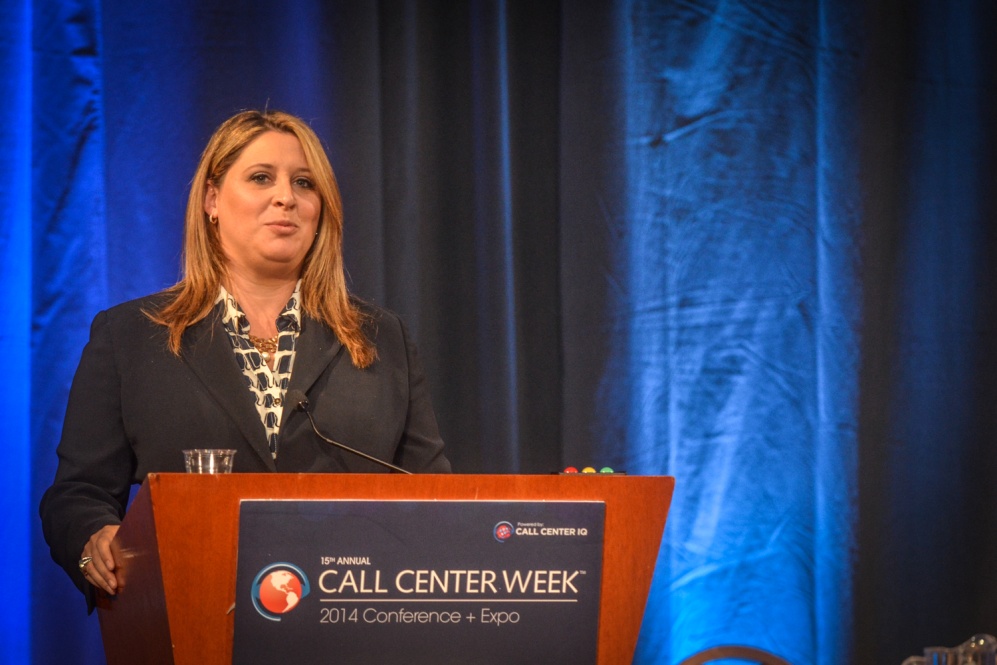
 Hannah Hager