
Category Archives: News articles

Articles appearing in print or online media.

Radio station causes static for some residents

Instead of her friend’s knowing voice, Barbara Devries’ phone calls are being answered with static.

Sterling resident Devries has been trying to ring her pal Amelia who lives at the Wingler House retirement community in Ashburn, but to no avail.

“I think instead of using all these smartphones, we better go back to smoke signals,” Devries said.

Likewise, Cascades resident James Thompson’s home phone has also been acting up. But, instead of just static on the line, Thompson can also overhear a Chinese talk radio show in English on his home phone landline.

“I listened to it for awhile,” Thompson said. “I didn’t understand at first, but now I completely understand.”

The interference and static on the line stems from the increased wattage of the radio station formerly known as WAGE. The station now has new call letters, WCRW at the 1190 AM dial, as well as a ten-fold increase in its wattage to 50,000 watts. The station sounds out from its three 195-foot lattice-tower AM radio transmitters in Ashburn.

The Loudoun-based station returned to the air April 11 after going dark more than one year ago. Avid WAGE fans that listened to the station for five decades, however, immediately noticed a stunning difference coming through the airwaves – a significant change in the radio station’s programming that now includes entertainment news coming out of Pacific Rim countries.

Immediately after shutting down in 2009, Potomac Radio, the owner of WCRW now known as New World Radio, began searching for a site for its new 50,000-watt towers. The station’s towers landed at the intersection of Loudoun County Parkway and Gloucester Parkway in the Route 28 corridor. The towers cost New World Radio $2 million.

The station’s new programming has been jarring to some residents. But, the increased wattage has left many Loudoun residents in its sound wake.

“I couldn’t make a phone call [out] or a phone call in,” Thompson said.

He phoned the Federal Communications Commission. The commission, he said, gave him “a long diatribe about how it’s not their problem” because they do not get involved with issues of interference. They instead told him that AM static interference is a local disturbance problem. He tried calling the number he knew for the radio station. It rang static.

Alan Pendleton, president of New World Radio, is aware of and quite familiar with the interference issue, adding that it happens all the time.

“It’s important to know that most interference issues are a result of the malfunctioning consumer electronic equipment, or its a cause of the copper telephone lines that are becoming an antenna,” he said.

Pendleton said telecommunications providers are best able to doctor the problem, as it is their equipment that picks up the signal. When a house is wired for phone services, telecommunications companies put filters around the wires, but sometimes the filters are not strong enough, he said. Sometimes, an additional filter around phones within the household are required.

Thompson patched things up by doing just that. He had his telecommunications provider install an ion ferrite filter that clamps around his phone lines. The filter negates all interference.

Although Thompson remedied his problem, he and Devries still have unanswered questions.

What is the county was going to do about it? Thompson said the supervisors did not understand what the increased wattage was going to mean nor did they understand the technicalities of the FCC license.

“I don’t understand how this radio station is allowed to operate,” Devries said. Devries worries about her elderly friends who may not be able to make phone calls in case of an emergency. “That’s dangerous, especially for them that they get all this static on their phones.”

Sterling Supervisor Eugene Delgaudio (R-Sterling) had not yet heard of the phone interference, but called it “an emergency situation.” He was nonplussed that it was happening in Loudoun where the supervisors “work tirelessly on improving our communication abilities.”

Delgaudio said the issue requires investigation and a possible declaration of a state of emergency.

“They can’t call 9-1-1 or reverse 9-1-1. Doesn’t that defeat everything? I mean, really. It’s intolerable and we have to work on it right away,” he said.

Contact the writer at hhager@timespapers.com.

This article was first published by Hannah Hager on LoudounTimes.com.
Herring hosts bills that will bolster business incentives

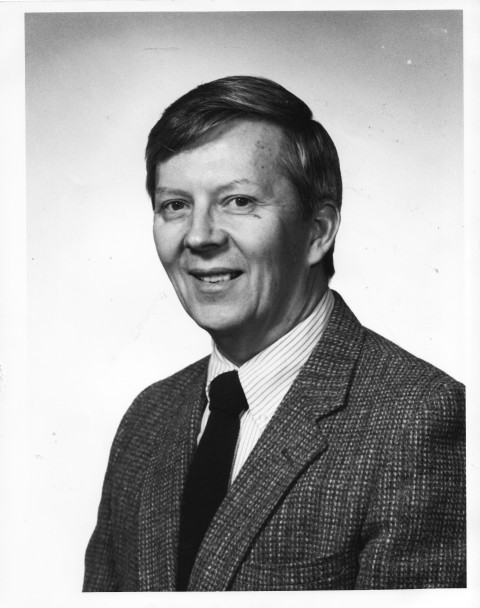
Virginia Sen. Mark Herring (D-eastern Loudoun) had a hand in bolstering business incentives in Virginia this month.

His legislation, Senate Bill 1326, which helps to create a research and development tax credit for start-up businesses and early-stage firms in targeted industries, was signed into law by Gov. Bob McDonnell April 7.

The bill is meant to target companies using research and development services through Virginia colleges and universities to strengthen the Commonwealth’s business competitiveness, according to a statement.

“Innovation is a huge driver of economic growth.  This is an example of a smart tax policy to promote additional investment in advanced technology industries, which have high- growth potential and pay high wages,” Herring said at the signing.

Herring also co-sponsored Senate Bill 1485 with Sen. Steve Newman (R-central Virginia) that will bolster the Commonwealth Research and Commercialization Fund. The fund will serve as a catalyst for the Virginia higher education research assets and private-sector funding to encourage evolving technologies, according to the statement.

“States all over the country, and countries all over the world have become very aggressive in trying to attract advanced technology industries to their areas,” Herring said at the signing. “It is vitally important for Virginia and our economy to remain competitive with those states and countries.”

Herring’s legislation are two of 10 measures that constitute the first part of the governor’s 2011 “Opportunity at Work” program that is positioning Virginia as an attractive place for new businesses.

“The key to turning our economy around and getting Virginians back to work is ensuring that businesses continue to choose the Commonwealth of Virginia to locate, grow and expand,” McDonnell said at the signing.  “Our economic success is dependent on good jobs, a well educated workforce and a strong business climate. The legislation I ceremonially signed today positions us to continue to be the best state in America in which to start or grow a business.”

This article was first published by Hannah Hager on LoudounTimes.com.

Times-Mirror site to be revamped into ‘Courthouse Square’

The Loudoun Times-Mirror building and its parking area are about to receive a major facelift.

The redevelopment of the Times-Mirror building will include the preservation of its red-brick facade and its circa 1916 historical main building, but the cinderblock addition at its rear will be demolished, said Bob White, president of Landmark Commercial Real Estate, the project’s developer.

In all, the redevelopment, named Courthouse Square, is projected to cost between $25 million and $30 million and will be finished in 2014 at the earliest, he said. Fifteen investors are currently involved in the project, he said.

Courthouse Square plans include 96,000 square feet of new construction and 9,000 square feet of renovations to total 106,000 square feet, White said. The Loudoun Times-Mirror building is around 9,000 square feet.

The Arundel family, publishers of the Times-Mirror, are currently the majority owners of the property.

“We are fortunate to have such a unique location. The proposal represents a tremendous opportunity for the town as well. We have worked hand-in-hand with the town on scale, architecture and general market concerns. The town has been extremely helpful and has shown great vision in the process,” said Loudoun Times-Mirror President and Publisher Peter Arundel.

The removal of the cinderblock addition at the rear of the Times-Mirror building will make way for an elevator lobby leading residents and visitors to a five-story structure that will include two stories of office space above a three-story at-grade and one and one half below-grade parking garage in what is now the Times-Mirror’s parking lot.

The alleyway that now connects King Street in the west to Church Street in the east will shift north toward the Times-Mirror’s red brick building. A breezeway will connect the Loudoun Street with Market Street entrances. Two retail shops and an elevator lobby will face Loudoun Street in the south.

The project has yet to be approved by Leesburg’s Board of Architectural Review. It will go before Leesburg’s Planning Commission April 21. The planning commission will discuss the allowance of a new height district to accommodate Courthouse Square. Currently, Leesburg has a height restriction of 45 feet, but Courthouse Square will require a height of 65 feet to accommodate the office space, which will pay for the three-story garage, White said. The neighboring Loudoun County parking garage is 45 feet tall.

On March 8, the Leesburg town council approved a motion to consider amending the maximum building height by a vote of 5-1-0. Mayor Umstattd cast the dissenting vote and councilman Tom Dunn was absent.

On April 12, Landmark erected a ‘balloon study’ in the Times-Mirror parking lot so that the public can see the visual impact from a particular vantage point.

When asked if the Times Mirror plans to remain in its current location, Arundel said, “We have every intent to remain in Leesburg if the rates are right.”

Contact the writer at hhager@timespapers.com.

This article was first published by Hannah Hager on LoudounTimes.com.

Times-Mirror wins sweepstakes, 35 other awards in annual state news competition

The Loudoun Times-Mirror on April 9 was honored by the Virginia Press Association with its top recognition for a nondaily publication, the 2010 “sweepstakes” award for best newspaper in the state.

In addition, the Times-Mirror was awarded the “Best in Show” honor for news photography by Photo Editor Beverly Denny.

In all, the Times-Mirror and The Indie were given 36 awards for excellence in news and photo journalism.

The annual journalism contest is a competitive and long-standing tradition involving 122 daily and weekly newspapers from across Virginia, with a total of 3,664 entries spanning multiple categories of news, photography, and advertising and production.

The Times-Mirror won a total of 31 separate statewide news and photo awards, while The Indie won a total of five awards from the VPA. The awards span the Times-Mirror’s news offerings in its print editions, as well as its robust online content at loudountimes.com. Within its category, the Times-Mirror one a total of one-third of the 107 overall awards for news and photography.

A total of 15 first place, seven second place and eight third place news and photo awards were given to the Times-Mirror staff. The Indie received a first place award and four third place awards.

There were 10 news categories where the Times-Mirror had multiple winners within a single news contest category.

In the category of “Government Writing,”the Times-Mirror swept all three top spots – first, second and third place – in the state.

The Times-Mirror also took two of the top three slots for Headline Writing, Feature Photo, Online Video, Combination-Picture-and-Story, General News Writing, Multimedia News Report, Feature Series or Continuing Story and Personal Service Writing.

“The Virginia Press Association is amongst the strongest in the country. This is quite an honor,” remarked Peter Arundel, Publisher of the Times-Mirror. “This validates our commitment to journalistic integrity. The people at the Times-Mirror are the best in the business and I am privileged to work with them.”

“The number of news awards for the Times-Mirror is truly amazing, but tell only half the story,” said Executive Editor Nicholas Graham.“Our news staff is the hardest working, most passionate and most committed in the field – and that comes through in the stories they write. Further, the recognitions we received speak volumes about the kind of news organization we have become in the past year. Not only the best in print, but the best online as well – with more stories, more topics, more video, more photos and more reader engagement through web comments, traffic and social networking.”

Here is a breakdown by Times-Mirror staff:

Beverly Denny, photo editor:

“Best in Show” – top state honors for photography
First place – Feature Photo
First place – General News Photo
First place – Personality/Portrait Photo
First place – Sports Feature Photo
First place – Sports Pages
Second place – Multimedia News Report
Third place – Feature Photo
Third place – Sports News Photo
Third place – Combination-Picture-And-Story

Nicholas Graham, executive editor:

First place – Government Writing
First place – General News Writing
Second place – Headline Writing
Second place – Multimedia News Report
Third place – Editorial Writing
Third place – Breaking News Writing
Third place – Combination Picture & Story

Hannah Hager, business editor

First place – Multimedia News Report
First place – General News Writing
Second place – Multimedia News Report
Second place – Business & Financial Writing
Second place – Feature Series/Continuing Story
Second place – Health, Science & Environmental Writing
Third place – Combination-Picture-and-Story

Crystal Owens, county government reporter

First place – Combination-Picture-and-Story
First place – General News Writing
Second place – Government Writing
Second place – Multimedia News Report
Second place – Feature Series/Continuing Story
Third place – Combination Picture & Story
Third place – Feature Series/Continuing Story
Third place – Government Writing (The Indie)

Jana Wagoner, public safety reporter

First place – Multimedia Feature Report
First place – General News Writing
Second place – Personal Service Writing
Third place – Combination Picture & Story

Matt Vecchio, features/video reporter

First place – Online Video
Second place – Multimedia News Report
Third place – Online Video

Carl Lukat, sports editor

First place – Headline Writing
First place – Sports Pages

The Indie

First place – Feature Writing Portfolio
Third place – Education Writing
Third place – Government Writing
Third place – In-Depth/Investigative Reporting
Third place – Personal Service Writing: “Dr. Indie”

The Times-Mirror also took home other news awards for: Health, Science and Environmental Writing (First Place); Informational Graphics (First Place); and General News Writing (Third Place).

In the VPA’s separate Advertising category, the Times-Mirror also collected eighteen awards for its creative and production services, including eight First Place awards.

The only other Loudoun publication, Leesburg Today, earned a single award for special sections/special editions.

For a full list of statewide VPA award winners in all categories, visit http://www.vpa.net.

Former mayor of Purcellville dies

A former, two-term mayor of Purcellville, Ronald Masters, died in his Winchester home March 17. He was 77 years-old.

Ron Masters

Masters, who was considered a tireless community servant, entered the public eye when he was elected to the Purcellville Town Council in the late 1970s.

He later served as mayor from 1982 to 1986, and then again from 1990 to 1994.

“Whenever we would go out on the town, it would be like pulling teeth with him to get him home because so many people wanted to talk to him about issues,” said his eldest son, Marc Masters, of Washington, D.C.

Masters is also survived by his two other sons, John, of Washington, D.C. and Michael, of Berryville. He is preceded in death by his wife Elizabeth and his daughter Jennifer.

Marc Masters described his father as a social person who frequently went out on the town to talk with residents about Purcellville’s issues. One of his first memories of his father’s time in office was when he accompanied him while campaigning door-to-door.

Though the town was home to just under 2,000 residents during Masters’ tenure, it struggled with the same growing pains it does today – an increase in development stressed the balance of its small town atmosphere. People moved to Purcellville for its small town feel, but that environment was slowly jeopardized by periodic growth, Marc Masters said.

“It could be kind of a heated issue, but he always sort of looked at it in a neutral point of view,” Marc Masters said.

“Ron anticipated the population growth in our Western Loudoun area and worked to get the town ready for it,” said David Milam, pastor at St. Andrew Presbyterian Church in Purcellville, during his eulogy. Masters was instrumental in setting up the Purcellville Urban Growth Area Management Plan, he said.

Milam said Masters was too progressive for his time, which is why he lost reelection in 1986. However, Masters decided to run again during the next election cycle because so many citizens asked him too, Marc Masters said. He did, and won.

Masters was very good at listening to his constituents and giving everybody a voice, taking all phone calls big and small.

“His patience and a listening ear. It was his biggest strength,” he said.

Ron Masters with his wife.

Masters taught his children to give themselves time to react to something, be very patient and tolerant – character traits he likely perfected in his professional life as a mechanical engineer for such companies as Westinghouse, Deco and Fairchild.
“Ron worked on things like the first stealth bomber and even helped make the black box that would go on the first space shuttle,” Milam said.

“Ron gave himself to young people, working with the students of Loudoun Valley and Loudoun County High Schools for an Annual Engineers Week, where kids could find out from him about the distinctions between mechanical, electrical and civil engineering and the like,” Milam said. “These community involvements would grow through his membership in Lions and Rotary to become a platform from which he would eventually run for Mayor of Purcellville.”

He received a bachelor’s degree from the University of Detroit-Mercy and a master’s degree in engineering from the University of Michigan. Masters also served in the Navy as a Construction Contract Administration Officer from 1959-1962. He was in the reserves until 1970. After his retirement, he taught engineering for 10 years at the Lord Fairfax Community College in Middletown, Va.

But engineering was more than just his career, it was his hobby, Marc Masters said. Masters once built an engine in the family’s basement and was constantly constructing things out of metal and machine parts.

In 2008, he and his wife were each honored with the Town of Purcellville Citizenship Award, which is dedicated to individuals who exemplify the highest quality of citizenship through their efforts to enhance the quality of life for residents.

Upon acceptance of his award, Masters said, “Purcellville is what it is because of you all. I wish I could give you all a plaque.”

Master’s memorial service was held March 23 at St. Andrew Presbyterian Church in Purcellville. Memorial donations may be sent to the Lord Fairfax Community College Educational Foundation Inc., 173 Skirmisher Lane, Middletown, Va., 22645.

Contact the writer at hhager@timespapers.com.

This article was first published by Hannah Hager on LoudounTimes.com.


Western Loudoun outperforms county in real estate market

If one were to look at the county’s real estate market as just a west side story, it would show two years of increasing sales.

The Western Loudoun real estate market, including the towns of Middleburg, Purcellville, Round Hill, Hamilton, Lovettsville and Waterford, saw an increase of sales from 2008 to 2010. In 2008, 465 homes were sold in Western Loudoun alone. That number spiked to 510 homes sold in 2010, according to market research conducted by housing analyst Rosemary deButts.

“We are cooking right along and seeing multiple offers,” said Sue Puleo, an associate broker at Prudential Carruthers in Hamilton. Puleo said the agents in her office started to see an uptick in sales starting the first week of March this year. She attributes increased sales activity to “a lot of pent up demand.”

“A lot of the sellers who have been waiting for the market to get better are thinking that now is a good time because it seems pretty stable,” she said.

So far this year, the total sales in western Loudoun in January and February 2011 have outperformed sales in the same period last year, deButts said.

“Preliminary results indicate that sales increased 6 percent compared to revised January figures and 21 percent compared to last February,” she said.

DeButts also noted that the February 2010 blizzards didn’t significantly affect Western Loudoun sales as much as it did throughout the rest of the county.

However, congruent with the rest of the county, median sales prices in Western Loudoun fluctuated. The median sales price in 2008 was $410,000 before it fell to $390,000 in 2009. The median sales price bounced back to $410,000 in 2010. So far in 2011, 66 homes have sold in the area at a median sales price of $399,000, according to deButts.

“Maybe they don’t get [the price] they want on the selling end, but make up for it on the buying end,” Puleo said.

The February median sales price in Western Loudoun declined to $390,000 from $409,000 in January, a drop of 5 percent. However, the median sales price was $385,000 in January 2010, which results in a 1 percent increase, she said. Since January 2010, the lowest monthly median sales price in Western Loudoun was $346,916 in May 2010 and the highest median sales price was $445,000 in August 2010.

Looking at the county as a whole, the median sales price was $354,250 in February and the average sales price was $410,388, according to the Dulles Area Association of Realtors monthly sales statistics report. These are significant increases compared to January’s median sales price of $314,394 and its average sales price of $363,394. Additionally, 251 homes sold in January and 272 homes sold in February throughout the county.

Round Hill was the shining star in sales last month. Twelve homes were sold in February, but with a median sales price of $325,000, the second lowest median up from Hamilton’s $249,978 median sales price for three homes sold in February. Purcellville came in second for total sales – ten homes were sold with a median sales price of $430,000. Conversely, only one home sold in Waterford last month with a median sales price of $620,000.

“I don’t think anyone expects it to be a dramatic change, but we’re in stable mode, which is a good place to be,” Puleo said.

Contact the writer at hhager@timespapers.com.

Below is a breakdown of the average days a home spends on the market in western Loudoun in the following price ranges. These sales are from February 2011 only.

Less than $200,000:  Four sales; the average days spent on the market was 45 days.
$200,000 – $399,999: 15 sales; 142 days on average.
$400,000 – $599,999: Nine sales; 191 days on average.
$600,000 – $799,999: Five sales; 70 days on average.
$800,000 – $999,999: Zero sales.
More than $1 million:  Two sales; spent an average of 669 days on the market.

This article was first published by Hannah Hager on LoudounTimes.com.

Finance secretary: Virginia revenue collections increase

February’s revenue collections in Virginia increased 17 percent over the same month last year.

In February, Virginia’s general fund revenues totaled $703,000, compared to $602,000 in February 2010. In addition, Virginia’s general fund revenues year-to-date are $9.2 million, compared to $8.9 million in 2010, which is on track to be an increase of 4 percent in 2011, according to Secretary of Finance Richard Brown.

This increase is ahead of the previous, projected annual increase of 3.5 percent that was written in the proposed budget in December, Brown wrote in a letter addressed to Gov. Bob McDonnell last week. In the same letter last year, Brown wrote that general fund revenues were expected to fall 2 percent in fiscal year 2010. In fiscal year 2009, it was projected to fall 7 percent. Fiscal year 2008 was the last time general revenue funds were expected to increase, by 1.2 percent.

February is the eleventh month in the last 12 months during which revenue collections have exceeded the amount compared to the same month the previous year. February is also the fourth consecutive month in which year-over-year growth was greater than 9 percent, according to Brown. The revenue increase was spurred by withholding and sales tax collections.

Earlier this month, the governor’s office also announced that Virginia’s unemployment rate had reached a two-year low. Virginia’s unemployment rate was 6.5 in January, which is the most current rate available through the Virginia Employment Commission. Loudoun’s unemployment rate was 4.4 percent in November, the most current number available from the county.

Still, McDonnell pointed out that although the “macro numbers” are positive, “we cannot lose sight of the fact that this recovery is still fragile and early.”

He said that too many Virginians remain unemployed and too many opportunities remain unavailable to Virginians.

In the future, “the administration will continue to adhere to a path of fiscal responsibility in the state budget and will aggressively support private-sector job creators with our public policies.”

Contact the writer at hhager@timespapers.com.

This article was first published by Hannah Hager on LoudounTimes.com.

Home prices on the rise in Loudoun

More and more people were attracted to high-ticket homes last month, while the number of homes sold remained steady compared to February 2010.

The average sales price of a Loudoun home, as well as the median sales price and the total dollar volume of sold homes, all increased last month compared to February 2010, according to a report released by RealEstate Business Intelligence, a Metropolitan Regional Information System company based in Maryland.

Loudoun’s average sales price came in at $410,388, a 9 percent increase over the same time last year, when the average ticket price was $376,184.

The average price for detached units spiked in February due to the sale of one $4.5 million property and one for $2.5 million home, according to Loudoun housing analyst, Rosemary deButts.

Median sales prices increased from $343,359 in February 2010 to $360,000 last month. Additionally, Loudoun’s sold dollar volume totaled $111,625,445, a 9 percent increase compared to $102,698,319 sold volume in February 2010.

DeButts gave a partial explanation for the median sales increase. Distressed sales, which are short sales and foreclosures, spiked to 43 percent in January, but had a healthy decline of 38 percent in February, she said.

“Fewer distressed sales translates to higher sales prices,” she said. Montgomery and Prince George’s counties both saw an increase of distressed sales from January to February.

DeButts said Loudouner’s shouldn’t put too much stock in the sales figures because real estate is a cyclical industry.  The average sales per month will increase dramatically until June when the average begins to decline in the second half of the year, she said.

Single-family, detached units accounted for 52 percent of total sales so far this year in Loudoun. Townhouses and other attached units represented 41 percent of the total and condominiums represented 7 percent of the market. Last year, 273 homes sold in February, this year 272 homes were sold.

Last year, the market was bolstered by the First Time Buyer’s Credit, deButts said.  So far this year, the Loudoun market is holding its own compared to last year, a pretty remarkable feat in the absence of artificially stimulated demand, she said.

Contact the writer at hhager@timespapers.com.

This article was first published by Hannah Hager on LoudounTimes.com.

Transportation secretary: Cut costs of Metro station

Several Loudoun leaders want to send Metrorail trains flying at Dulles International Airport.

Virginia Secretary of Transportation Sean Connaughton wrote a letter March 15 addressed to Charles Snelling, chairman of the Metropolitan Washington Airports Authority, imploring the chairman to change Dulles airport’s proposed underground Metrorail station to an aerial station.

Connaughton’s main reason behind beseeching the change is that it will save $640 million in taxpayer money.

The second phase of Metrorail’s expansion to Loudoun, which includes the Dulles airport station, is more expensive than was initially anticipated. Phase two is projected to cost $3.8 billion – a more than $1 billion increase over its original projection. Phase one costs $2.7 billion.

Loudoun Board of Supervisors Chairman Scott York (I-at-large) said last month that he endorsed Metrorail’s aerial station as a cost-cutting measure.

The Loudoun Economic Development Commission voted unanimously to endorse the above-ground option in September. Chairman John Wood, who is also the chief executive officer at Telos Corp. in Ashburn, said at the time that he saw five dollar signs in front of the underground option and only two dollar signs in front of the aerial proposal.

Metrorail currently has designs for an underground tunnel station as well as an aerial, or above-ground, station.

By selecting the aerial alternative, the authority would be showing taxpayers that they are concerned about the use of valuable state and local dollars and assets, Connaughton said.

Funding for construction comes from local jurisdictions, an increase in tolls on the Dulles Toll Road and the creation of a special tax district surrounding the Metro stops.

Fairfax Board of Supervisors Chairman Sharon Bulova scribed a letter to Snelling last month. In it, she states that Phase two cost estimates do not sit well with the Fairfax board.

“When coupled with the recent information about actual costs exceeding budget for station finishes on [phase one], the county is further concerned about the accuracy of the cost estimate for [phase two],” she writes.

“If the Airports Authority Board favors an alignment that is more costly than the aerial alignment, then the Airports Authority should fund the differential without impacting Fairfax County or tolls on the Dulles Toll Road,” she said.

Connaughton also expressed concern about rising toll rates on the Dulles Toll Road. He said that toll rates must remain as low as possible and that the authority “must do anything possible with alternative design selection, value engineering, excellent project management and oversight and creative financing to keep costs low.”

Connaughton also pointed out that Fairfax and Loudoun County leaders have endorsed the aerial station, as both governments have direct impact with finance commitments to the project.

Contact the writer at hhager@timespapers.com.

This article was first published by Hannah Hager on LoudounTimes.com.

Burton: ‘Bow wave’ in near future

Supervisor Jim Burton (I-Blue Ridge) stopped by the Economic Development Commission meeting March 4 to give a presentation on the county’s capital needs assessment for fiscal years 2017 to 2026.

As a member of the fiscal impact committee, Burton and several others tackle the county’s infrastructure needs and report the number and type of facilities needed for future development. The committee also develops policy recommendations for the planning commission and the Loudoun Board of Supervisors.

The county’s needs are based on its projected population growth.

Loudoun’s current population is approximately 312,311 according to 2010 U.S. Census Bureau figures This is “22,000 more people than we thought we’d have,” Burton said. In 2017, an estimated 333,000 people will call Loudoun home. That number will jump to 402,000 in 2026, according to the county’s projections.
Given these estimated population spikes, the finance committee approved nearly 40 projects for future construction. They include a juvenile assessment center, waste drop-off centers, park and ride lots, two fire stations, an animal shelter, community park and a library, among others.

The committee also approved 10 more schools; four elementary, three middle and three high schools. These schools have not been approved by the Loudoun Board of Supervisors.

Of the 25 facilities in the capital needs assessment, 12 are needed by 2017 in Ashburn alone, Burton said. They include a fire and rescue station, a developmental services residential facility, mental health group residence, recreation center, regional park, district park, community park, recycling drop-off center, community center, teen center, senior center and an elementary school.

But, where is the money for these projects?

The capital needs assessment document came together in recent months because the lights went on in many peoples heads about what the costs and plan requirements were, Burton said.

“The magnitude of this problem is quite sufficient,” he said.

Burton said the board has delayed construction for these facilities for many years because of fiscal constraints. By doing this, however, these facilities were pushed out beyond the capital improvement program time frame, which created a bow wave of paying for these facilities.

The committee has made several suggestions to the board on paying for the facilities, Burton said. Policy-wise, the board can think about delaying capital projects further, he said. The supervisors could also consider some additional sources of money or they could change the standards of the facilities they are promising to the public, which would reduce the costs. The other sources of money would include increasing taxes, debt and revenue sources.

“Any way you look at it, it is time to pay the piper,” Burton said.

Michelle Frank, who sits on the Economic Development Commission meeting and works at Orbital in Dulles, suggested the committee consider collocating compatible facilities. For example, turning more schools into park and recreation centers during after-school hours.

Burton said the committee is also looking into changing facility standards to reduce the number and scope of facilities.

Loudoun architect Alan Hansen warned against using cheaper materials to build schools and other buildings, however, because the buildings would start to deteriorate at higher rates of speed, which would only delay the bow wave, not delete it.

Contact the writer at hhager@timespapers.com.

This article was first published by Hannah Hager on LoudounTimes.com.